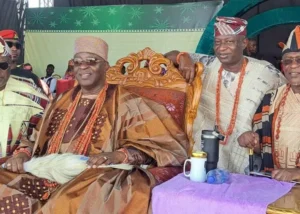
From General Benjamin Adekunle to Sir (Barr.) Olusegun Adekunle: The Asipa Title in Transition
 pannigeriannews
3 min read
pannigeriannews
3 min read

When Sir (Barr.) Olusegun Adekunle takes on the revered title of Ashipa of Ogbomosoland, he steps into a lineage touched by history, honour, and uncommon service. More than five decades earlier, in 1968, another member of the extended Adekunle family—General Benjamin “Black Scorpion” Adekunle—held the same title under Oba Olajide Olayode II (1967–1969), the 18th Soun of Ogbomosoland. The recognition of a young but already formidable military officer would eventually become a defining moment in the history of the title, as General Adekunle went on to etch his name in Nigeria’s national story as one of the most fearless and controversial commanders of the Civil War.

Today, the return of the Ashipa title to the same larger family is not hereditary succession but a remarkable coincidence rooted in merit, legacy, and community service. The new Ashipa was just eight years old when General Adekunle received the title. Two generations apart, shaped by completely different eras and societal circumstances, yet united by an enduring commitment to the upliftment of Ogbomoso.
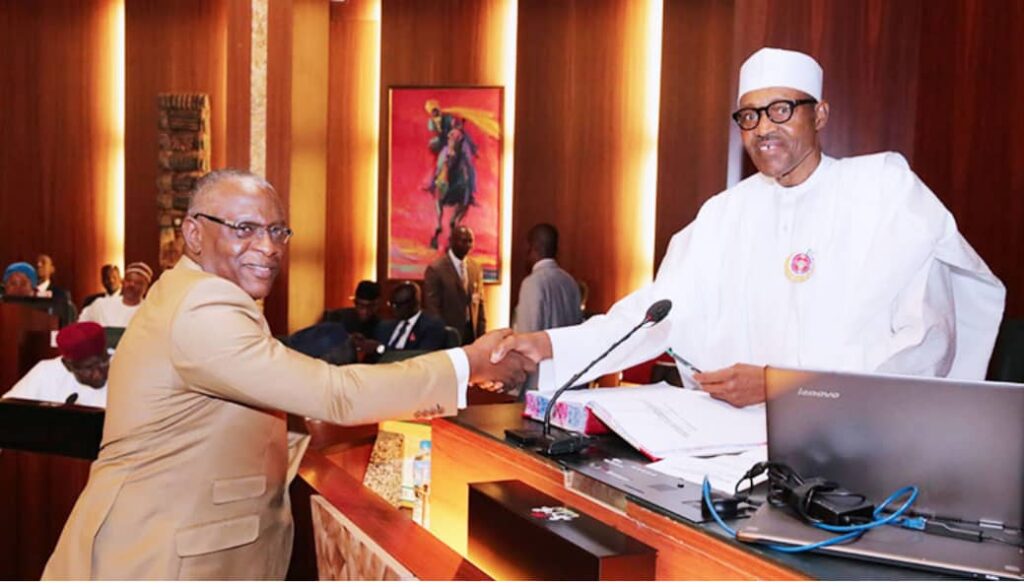
General Benjamin Maja Adekunle embodied the turbulent, nation-defining 1960s—a soldier forged in conflict: decisive, brilliant, and unyielding. His leadership during the Nigerian Civil War earned him both fame and notoriety, but always respect. A man whose presence commanded attention and whose battlefield strategies altered the course of military engagements, he carried with him an unwavering loyalty to Ogbomoso. Even as he rose through the military ranks, his bond with home remained strong enough for him to be honoured with the Ashipa title, a symbol of courage, vigilance, and service.

Sir (Barr.) Olusegun Adekunle represents a different but equally impactful path to service—one built in the civil sphere, in the quiet but powerful corridors of administration, policy, and national planning. A seasoned lawyer and technocratic administrator, he rose through the ranks of Nigeria’s federal civil service with enviable diligence. Over three decades, he held strategic positions that demanded discipline, intellectual depth, emotional intelligence, and steady leadership. His work helped shape policy outcomes, influence national development programmes, and strengthen the institutional backbone of government ministries. To colleagues and associates, he is a man of humility, methodical intelligence, and integrity—one whose influence is often subtle yet indispensable.

His assumption of the Ashipa title therefore represents the evolution of service, from traditional military valor to contemporary governance competence. It marks a shift from the battlefield to the policy boardroom, from the commander’s bark to the administrator’s pen—both anchored in the same values: loyalty, responsibility, and a commitment to uplift Ogbomoso.
This is the first time in history that two members of one extended family will hold the Ashipa title, despite it not being hereditary. It underscores a shared generational ethos of discipline, excellence, and service—manifested differently but rooted in the same family soil. Across eras, the Adekunles have embodied the principles the title represents, each responding to the demands of his time.
This continuity acquires deeper meaning under the visionary leadership of Oba Ghandi Afolabi Olaoye, Orumogege III, whose reign has redefined the approach to traditional titles in Ogbomoso. His emphasis on merit, relevance, diaspora engagement, and practical contributions to community development aligns seamlessly with the selection of Sir Adekunle. Under Oba Ghandi’s modernizing posture, titles are no longer ceremonial ornaments—they are platforms for impact, calling for those who bring value, ideas, and active leadership.
The installation also includes the conferment of Yeye Ashipa on his wife, a recognition that extends the family’s role into the social and cultural spheres of community building. Together, they represent a partnership grounded in shared values, compassion, and a deep sense of communal responsibility.
Thus, the Ashipa title transitions from the warrior heroics of Benjamin Adekunle to the administrative brilliance of Olusegun Adekunle—a journey that mirrors Ogbomoso’s evolution from a warrior-rooted society to a centre of education, governance, and strategic development. Two eras, two philosophies, one lineage. And at the heart of it all, one unbroken commitment: service to Ogbomoso.
As Sir (Barr.) Olusegun Adekunle assumes this mantle, history does not merely repeat itself; it renews itself—proving that greatness may take many forms, but true service remains timeless.


About The Author