 pannigeriannews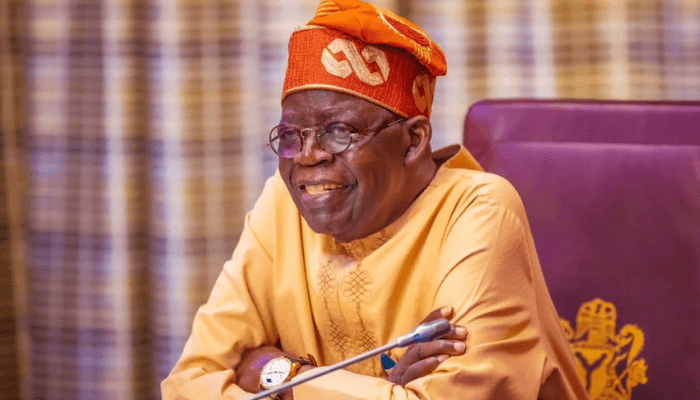
By Festus Adedayo
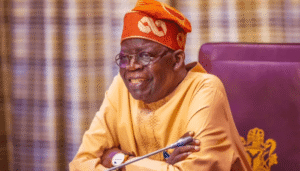
When President Umaru Musa Yar’Adua departed the shores of Nigeria for medical treatment in Saudi Arabia on November 23, 2009, I served as Chairman of the Editorial Board of the National Life newspaper. The publication was owned by then Senator Bola Ahmed Tinubu, national leader of the opposition Action Congress of Nigeria, (ACN) and today the President of Nigeria.
Official releases claimed Yar’Adua suffered from acute pericarditis, compounded by a chronic renal condition. What was framed as a brief consultation stretched into an agonizing, month-long absence. In February 2010, Yar’Adua was clandestinely smuggled back at nocturne, shielded from the citizens he was elected to govern. Barely three months later, on May 5, 2010, his passage came like a rude awakening. He was said to have caved in to the Non-Hodgkin Lymphoma disease.
Former President Olusegun Obasanjo later vehemently denied deliberately imposing a terminally ill candidate. Yet, he conceded a critical truth: he was fully aware of Yar’Adua’s severe health challenges prior to handpicking him. Yar’Adua’s declining health was never a state secret. During the presidential campaign in early March 2007, his health failed dramatically, necessitating an emergency evacuation to Germany.
I recall seeing him in person during that turbulent period, sitting just a few seats away from him. It was on his visit to then governor of Enugu State. Yar’Adua bore the unmistakable visage of a deeply frail man, his left hand bearing cicatrix of an engrafted flesh. He was accompanied by a stockily built aide carrying a shoulder pouch of essential medications.
As the man who wore a single lapel of dual attributions as Katsina State governor and PDP presidential candidate spoke, that aide decanted drugs into his palm, handed him water and Yar’Adua swallowed them. Whoever drafted a man in such a fragile state into the grueling marathon of governing a nation of over 200 million people could not possibly have had his best interests or those of the nation at heart.
As public anxiety deepened, Obasanjo orchestrated a live, televised telephone conversation, making that famous rhetorical question, “Umoru, are you dead or alive?” From his hospital bed, Yar’Adua offered a feeble response of, “I am not dead, I am alive.” Yet, weeks before his inauguration, he was again flown to Germany for urgent treatment. Aso Rock consistently denied the severity of his condition, while political opportunists and religious charlatans issued passionate calls for national fasting and intercession.
It was amid this cacophony of deceit that I wrote in my National Life column a piece with the title, “Why We Must Neither Fast Nor Pray for Yar’Adua.” In it, I invoked that foundational Yoruba proverb: “A kìí jí apiroro – No one wakes the cunning actor who merely simulates sleep; it is only the person who is genuinely asleep that can be awakened. How could a nation genuinely offer prayers for a leader whose inner circle perpetually lied about his physical condition?
Around that same period, the owner of National Life, Bola Tinubu, joined me in what lawyers call consensus ad idem on the Yar’Adua ailment roulette. He launched a scathing verbal assault on the ailing president. In a press release, he declared that “the country is now drifting and groping in the dark, like a ship without a captain, in a stormy ocean.” Tinubu then demanded that Yar’Adua honour Section 145 of the 1999 Constitution by transmitting a written declaration to the National Assembly, empowering Vice-President Goodluck Jonathan to act as President.
Fast-forward sixteen years later, and President Bola Ahmed Tinubu finds himself embroiled in exact same constitutional transgression he once fiercely condemned. He recently went AWOL from his official duties for 30 consecutive days on an undisclosed European sojourn, grossly violating same Section 145, without transmitting power to his Vice President.
This tragic irony brings to mind the classical Yoruba proverb on historical reciprocity: “Tí o bá máa sin ègbón rẹ ní ìhòhò, rántí mú àwọn àbúrà rẹ l’ówó – If you intend to strip your elder brother naked at his burial, remember to bring your younger siblings along to witness the horrifying spectacle. Its moral imperative is timeless: the standard of fairness, empathy, or constitutional integrity you extend to those ahead of you today sets the exact template for how you will be judged when your turn arrives. Today, Nigerians are roiling in unprecedented hunger; petrol sells at a perilous price and hundreds of Nigerians are in kidnappers’ den, yet Tinubu said he enjoyed himself on his Europe vacation and was kicking.
The precedent of national anxiety over the failing health of Nigerian presidents is deeply rooted in our modern political history. Beyond the Yar’Adua era, similar dark clouds hovered during the military dictatorships of Generals Ibrahim Badamasi Babangida and Sani Abacha. Babangida was eventually forced to admit he was suffering from radiculopathy – a painful nerve root compression in the spine caused by an old shrapnel wound – requiring extended medical treatment in Germany.
Similarly, in the final days preceding General Abacha’s sudden demise in June 1998, the dictator appeared in public looking exceptionally gaunt and hollowed out. Investigative publications, most notably TELL magazine, meticulously documented Abacha’s physical decline, noting his strained posture, ashen complexion, drawn features, and hesitant gait. On June 8, 1998, Abacha passed on inside the Presidential Villa.
Nearly two decades after Abacha’s death, Nigeria entered yet another debilitating cycle of presidential health secrecy under President Muhammadu Buhari. Between 2015 and 2021, Buhari spent hundreds of days in London hospitals undergoing treatments for undisclosed ailments, while his media aides churned out euphemistic press statements that insulted the intelligence of the electorate.
In African political culture, the physical health of a sitting president is almost universally treated with the paranoid secrecy of an Ilédì – the sacred, highly restricted conclave of the traditional Ogboni fraternity. In mature constitutional democracies, however, executive health is recognized as a foundational pillar of political and economic stability. When a leader is incapacitated, executive decision-making stalls, creating dangerous power vacuums, administrative paralysis and governance by unelected cliques.
Modern financial markets thrive on predictability. When a president is incapacitated or shrouded in health rumours, national economies face immediate headwinds: currency volatility, capital flight and stock market declines. Furthermore, in a constitutional democracy, fitness for office is a public trust, not a private matter. When an elected leader lacks the stamina required for daily governance, the presidency devolves into a hollow symbol and the president, a figurine.
Scholars have noted that the instinct of presidential minders to conceal illness stems from traditional African concepts of royalty. In Yoruba traditional political philosophy, it is a deeply rooted taboo to publicly associate a reigning king (Oba) with human frailty, bodily infirmity or physical decay. The very cognomen of imperial power – Kábiyèsí (K’á bi ó ò si) – “He who cannot be questioned” – derives from the premise that the king, as Aláșe Èkeji Orișà, embodies the collective vitality of the realm. To publicly admit that an Oba is sick is to suggest spiritual vulnerability, implying that the kingdom itself is exposed to harm.
Because direct reference to a king›s illness is prohibited, Yoruba culture developed sophisticated euphemisms. To describe a king›s ill health, they say, “Ara Oba ò dájú” – ” The King’s body is not completely firm”. To announce his passing, one never says he died; rather, Oba wàjà – “The King has ascended into the vault, the arctic” or, Erin wó, Àjànàkú sùn bí òkè! – “The mighty Elephant has fallen, sprawling endlessly like a huge mountain!” In two previous essays I did: “The President is a Sick Man: Buhari’s Secret Therapy Inside the ‘Oneida’” (April 4, 2021) and “The President is a Sick Man” (October 20, 2024) I drew a direct historical arc from 19th century American presidential health cover-ups, to modern Africa. I argued that stealth medical trips disguised as “working vacations” mirror the Yoruba idiomatic phrase of “Ó jo gáté, kò jọ gàté, ó fi ęsè méji tiro gáte-gàte.” This descriptive phrase captures an awkward attempt to conceal an obvious impairment, where the effort to hide a physical limp only makes the uncoordinated gait more conspicuous to onlookers.


About The Author