SGBV in Oyo: Urgent need to support survivors of forced economic dependence
 pannigeriannews
9 min read
pannigeriannews
9 min read
By Oluwatoyin Adeyemi
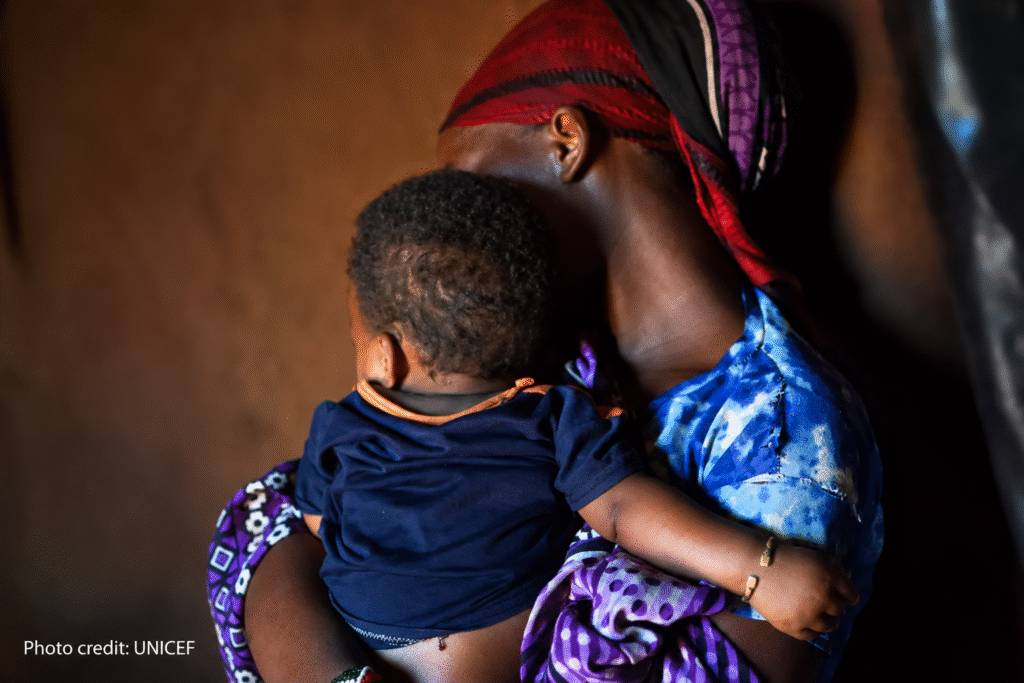
Oyo State, Southwest Nigeria has a serious problem of Sexual and Gender-based Violence (SGBV), which manifests in various forms. Apart from the issues of underaged marriages, rape, incest and physical violence, there is a serious dimension of SGBV, which takes the form of forced economic dependence. This describes a situation in which intimate male partners compel women to forgo pursuing an economic or vocational activity, in order to dominate and control them.
For many women trapped in financial dependence, speaking out against abuse can come at a particularly high cost. Nigeria has laws designed to protect survivors of SGBV, but many women still do not know where to find help or how to access the support available to them.
Across Oyo State, women continue to experience forms of gender-based violence that do not always leave visible scars. Among them is economic abuse which is the control, restriction or denial of financial resources and opportunities in order to leave women dependent on abusive partners and make it difficult for them to leave such relationships.
The hidden face of economic abuse
The reality of two women illustrate how economic control can unfold within marriage and other relationships. In line, with standard procedures and best practices, the identities of the women referenced in this report, including their identities and locations have been withheld to protect their privacy.
The first, a woman in her early thirties and a mother of two young children, was a make-up artist who had built a thriving business before marriage. She had paid her way through school, learnt her trade and established a shop. After the birth of her first child, however, her husband insisted that she remain at home to care for the children. Her business came to an end.
With the loss of her business came the loss of her independent income. Over time, the financial dependence created by the situation made it increasingly difficult for her to exercise the financial freedom she had enjoyed before marriage.
The second woman, in her mid-thirties, holds a master’s degree and had aspirations of becoming a lecturer and pursuing a PhD. She narrated how her husband repeatedly asked her to put her career on hold, first until their child turned one. Despite later making a promise that he would support her to establish a business, both promises, including the resumption of her academics were never fulfilled.
When she eventually secured a teaching job, the situation deteriorated. Her husband became physically abusive and went to her workplace in an attempt to force her to resign.
With assistance from her father, she eventually started a business selling tailoring materials. But rather than easing the conflict, her growing economic independence appeared to intensify her husband’s hostility.
He locked up her shop and accused her of being “arrogant” and “refusal to be submissive” because she was earning her own money. The violence eventually forced her to leave the marriage with her children. The matter is now before the courts, including a dispute over ownership of the business premises. These two cases differ in their circumstances, but they point to the same underlying problem: when a woman has no independent source of income or control over resources, her ability to resist abuse, seek help or leave an unsafe relationship can become severely constrained.
When economic dependence becomes a tool of control
Dr. Abimbola Ayo Afolayan, is a freelance researcher and scholar at the Institute of Peace, Humanitarian and Conflict Studies of the University of Ibadan with interest in Gender Relations. Speaking during a phone interview with our reporter, she stated that economic dependence needs to be understood within the wider framework of violence, power and autonomy.
“Violence is not limited to physical harm. It encompasses any act that causes physical, sexual or psychological harm, including coercion and arbitrary deprivation of liberty,” she said. According to Afolayan, forced economic dependence can reinforce existing power structures through the systematic denial of resources, opportunities and autonomy.
“When a woman is economically dependent, her subjugation becomes institutionalised: she cannot bargain and cannot make decisions on her own,” she said. Her observation is particularly relevant to situations where women attempt to regain financial independence. Afolayan noted that when women resist economic control by starting businesses or pursuing economic opportunities, violence can sometimes escalate.
She described this as a crucial dynamic because economic independence may be perceived as a challenge to an established pattern of control, with violence then being used to re-establish that control.
“The violence is not random; it is purposeful and aimed at re-establishing control,” she said.
Her argument suggests that economic abuse should not be treated simply as a disagreement over household finances. In some circumstances, control over money, employment and property can become part of a broader pattern of coercive control.
What the law says
Nigeria’s Violence Against Persons (Prohibition) Act, 2015 recognises economic abuse within its provisions. The law addresses conduct including deprivation of or restriction of access to economic or financial resources, controlling or withholding money needed for basic necessities, damaging or destroying property, and forcing a person into financial dealings against their will.
Yet the existence of legislation does not automatically translate into protection.
Economic abuse can be difficult to identify because it often happens behind closed doors and may initially be presented as an ordinary disagreement about household responsibilities, spending or marital roles.
For some women, the real consequences become apparent only when they attempt to leave or regain control over their finances.
The scale of silence
The challenge extends beyond economic abuse.
The 2024 Nigeria Demographic and Health Survey reported that 21 per cent of women aged 15 to 49 had experienced physical or sexual violence. Among those who had experienced such violence, only 24 per cent sought help to stop it. Another 18 per cent told someone but did not seek formal help, while 58 per cent neither sought help nor told anyone.
The figures are national rather than specific to Oyo State, but they illustrate the extent to which violence can remain outside formal reporting systems.
In August 2026, International Idea in partnership with NAPTIP (National Agency for the Prohibition of Trafficking in Persons) organized a capacity-building programme for journalists in Oyo State under the European Union-funded ‘Ending Sexual and Gender-Based Violence Project’. Data presented at the training indicated that only 41.8 per cent of respondents were aware of GBV laws and policies, while awareness of legal aid stood at 35.4 per cent.
The Oyo State Rapid Response Team on Gender-Based Violence has also recorded hundreds of cases involving abandonment, defilement, rape and intimate partner violence. Of the 692 cases cited, 418 involved children aged between zero and 17, with many incidents occurring in rural communities.
Speaking at an interview in Ibadan in September, the Public Relations Officer of the Nigeria Security and Civil Defence Corps, Oyo State Command also revealed that the command has recorded 96 Sexual and Gender Based Violence cases between January and August 2026.
Reported cases, however, represent only those that enter the system.
Fear, stigma, distrust of institutions, social pressure and economic dependence can all make reporting difficult. This means that official figures may not fully capture the experience of women living with violence.
Where survivors can seek help
Oyo State has several institutions and mechanisms through which survivors can seek protection, medical care, legal assistance, counselling and referrals.
The National Agency for the Prohibition of Trafficking in Persons (NAPTIP) has a presence in Oyo State and provides services that include rescue, shelter, legal assistance, counselling and rehabilitation for cases within its mandate.
The Nigeria Security and Civil Defence Corps (NSCDC) can provide first-response protection and referrals, working with other relevant agencies. Survivors can approach NSCDC offices for assistance and referral to appropriate services.
The Oyo State Rapid Response Team on SGBV, established under the state’s response framework, coordinates interventions involving government agencies, law enforcement bodies and civil society organisations. Its functions include emergency protection, referrals to medical, legal and psychosocial services, case documentation and follow-up, as well as community awareness. They have a toll free line – 08004004040, their other numbers are 09010488700 and 09094333331.
The Gender Desks of the Nigeria Police provide another avenue for reporting violence and seeking referral and protection. Survivors can report economic abuse, physical violence, threats and related forms of abuse through appropriate police channels.
The Oyo State Ministry of Women Affairs and Social Inclusion serves as a key institution in the state’s response to gender-based violence, including coordination, advocacy, counselling and referrals for legal and other support.
The Abiyamo Sexual Assault Referral Centre (SARC) in Ibadan provides integrated services including medical care, psychosocial support, legal assistance and referrals. However, awareness of the centre remains limited, while staffing and funding constraints have been identified as factors, which affect the reach of specialised services, particularly for survivors in rural communities.
Women Safe House and Sustenance Initiative is a privately owned women-shelter in Ibadan. They provide emergency shelter for women and girls in crisis. They can be reached on 08121133399.
The existence of these services is important. But a support system can only protect people who know that it exists, trust it and can realistically reach it.
Progress, but significant gaps remain
Oyo State has taken steps towards strengthening its institutional response to gender-based violence.
These include the Oyo State Violence against Persons Prohibition (VAPP) law, 2020, which was passed by the Oyo State House of Assembly to strengthen coordinated responses; the establishment of the Oyo State SGBV Response Agency in 2022; and policy measures addressing issues including child labour and economic exploitation.
However, significant gaps remain as there are aspects of the Oyo State VAPP law that have to be reviewed and the Abiyamo SARC in Jericho Nursing Home has to be properly funded and staffed. Hopefully the SARC model can be replicated in all the local governments in Oyo State.
With specialised services concentrated largely in Ibadan, women living in rural communities can face considerable difficulties accessing help. Transportation costs, limited awareness, fear of stigma and inadequate knowledge of referral pathways can all become barriers.
There is also the question of what happens after a survivor leaves.
For a woman whose income has been controlled or whose business has been destroyed, leaving an abusive relationship may mean losing access to housing, food, childcare and other basic necessities.
This is why economic empowerment cannot be separated from survivour protection.
Beyond telling women to speak up
The response to SGBV cannot simply be to tell women to speak up.
Women need to know where to go, who will listen, who will protect them and where they can obtain legal, medical and psychosocial assistance. They also need pathways to economic recovery when leaving an abusive relationship threatens their ability to provide for themselves and their children.
Dr. Afolayan believes that survivors require more than sympathy.
“They need tangible support – legal, economic, psychological and social,” she said. “They need it before they are forced to choose between violence and destitution.”
That support must extend beyond major urban centres.
Awareness campaigns need to reach women where they live and work, in markets, cooperatives, salons, workplaces, social groups and places of worship and in languages they understand.
Community leaders, health workers, law enforcement officers, employers, financial institutions and civil society organisations also have roles to play in identifying economic abuse and directing survivors towards appropriate support.
The objective should not only be to help women escape violence. It should also be to ensure that leaving does not mean losing every means of survival.
Bridging the support gap
The real measure of Oyo State’s response to SGBV should not be the number of cases reported alone.
It should also be the number of women who know where to seek help, the number who can access that help without facing prohibitive barriers, and the number who are able to rebuild their lives after leaving abusive situations.
For women experiencing economic abuse, independence is more than having money. It can mean having the freedom to make decisions, access opportunities, seek assistance and leave an unsafe environment without facing destitution.
The challenge, therefore, is to build a system in which survivors do not have to choose between enduring violence and losing their means of survival.
No woman should have to make that choice


About The Author