 pannigeriannews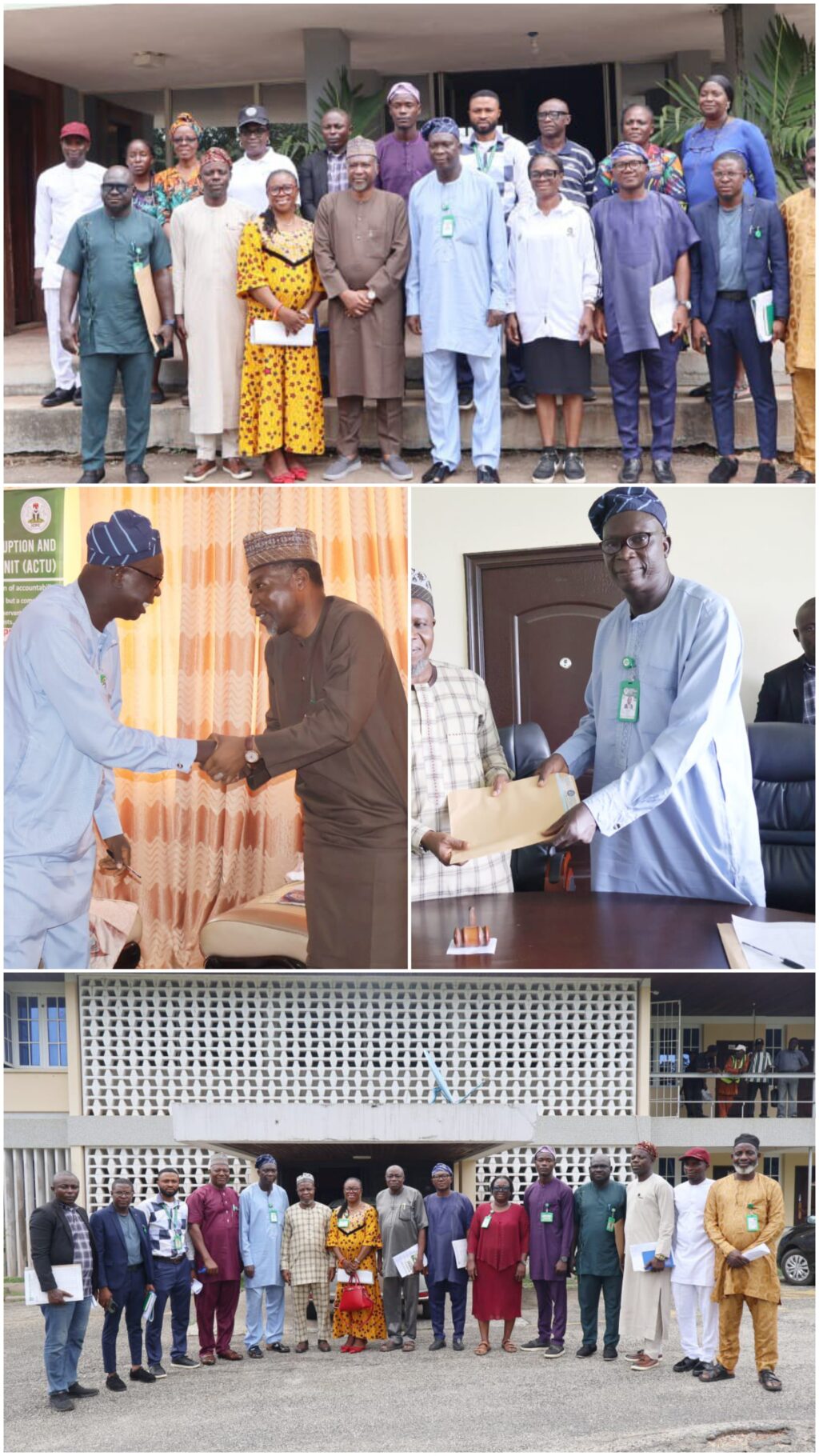
By Aliyu Mofoluwaso Raheem
The management of the Federal Polytechnic, Ayede (FEDPA) has initiated collaboration with the National Horticultural Research Institute (NIHORT) and the Cocoa Research Institute of Nigeria (CRIN) to strengthen agricultural education, research, skills development and practical training at the institution.
The Rector of the Polytechnic, Dr. Isiaka Tunji Adelabu, led the institution’s delegation to the two agricultural research institutes in Ibadan, Oyo State capital, as part of efforts to establish partnerships that would provide technical support and enhance the capacity of students and staff of the Polytechnic.
At NIHORT, Dr. Adelabu commended the management of the institute, led by its Executive Director, Prof. Muhammed Lawal Attanda, for the assistance it had rendered to the Polytechnic in the past.
The Rector appealed for further support, describing the engagement as part of his administration’s efforts to take the Polytechnic to an enviable height.
Speaking on the areas of proposed collaboration, the Acting Head of the Department of Agricultural Technology, Dr. Temitope Serah Akinde, said the Polytechnic was interested in partnerships on the provision of seedlings, as well as the training and capacity development of students and staff.
Dr. Akinde said the meeting was aimed at establishing a long-lasting relationship that would be mutually beneficial to both institutions.
She said the Polytechnic wanted the engagement to “stimulate a long-enduring legacy that will aid mutual benefit to both parties.”
The Acting Director of Physical Planning of the Polytechnic, Arc. Moruf Isola, disclosed that a vast expanse of land had been earmarked for the Department of Agricultural Technology for food production.
He assured the institute that the Polytechnic had adequate land to support the proposed agricultural activities.
Also speaking, the Acting Director of the Centre for Vocational Skills Acquisition and Entrepreneurship Development (CVSAED), Mr. Oluwaseun Christopher Owojori, called for the development of a framework to guide the collaborative process.
Owojori advocated the signing of a Memorandum of Understanding (MoU) between the two institutions and proposed the appointment of contact persons who would serve as links between the organisations.
The acting Director of Students Industrial Work Experience Scheme (SIWES), Mr. Abdullah Adisa, said the Polytechnic was seeking NIHORT’s support in crop production, training of students and staff, as well as the placement of students for industrial training.
Responding, the Executive Director of NIHORT, Prof. Muhammad Lawal Attanda, commended Adelabu for what he described as his proactive approach to institutional development.
Attanda recalled that upon assuming office as Executive Director of NIHORT, he embarked on a tour of the International Institute of Tropical Agriculture (IITA), Ibadan, adding that the success recorded by the institute could be attributed partly to such proactive engagements.
He assured the Polytechnic of NIHORT’s readiness to collaborate with it, saying that his staff had the passion for growth and development.
“We will go home with our team of scientists and experts to deliberate on your requests, and I am sure our collaboration will yield a fruitful result,” Attanda said.
The Polytechnic’s delegation subsequently visited the Cocoa Research Institute of Nigeria (CRIN), where Adelabu said the institution was interested in tapping into the institute’s wealth of experience and expertise to improve agricultural education and practical training.
The Acting Dean of the School of Agricultural Technology, Mr. Bashiru Bello, said the Polytechnic was particularly interested in collaboration with CRIN in the areas of staff and student capacity building, training, technical support and access to modern agricultural technologies.
Responding, the Acting Executive Director of CRIN, Dr. Rasheed Abiodun Adedeji, said the institute was established in 1964, with its core mandate covering research into cocoa, coffee, cashew and tea.
Dr. Adedeji described CRIN as one of the leading agricultural research institutes in Africa, noting that it had more than 60 doctorate degree holders.
He said the institute was ready to collaborate with the Polytechnic but stressed the need for all necessary structures and procedures to be put in place.
He identified the signing of a Memorandum of Understanding between the two institutions as one of the key steps towards formalising the partnership.
Adedeji also emphasised the importance of soil testing before agricultural production, noting that such testing would determine whether the soil was suitable for the crops intended for cultivation.
He said several organisations had partnered with CRIN and expressed confidence that the proposed partnership with FEDPA would be beneficial to both institutions.
In his vote of thanks, Owojori expressed appreciation to the management of CRIN for the warm reception accorded the Polytechnic’s delegation.
He recalled his previous association with some staff of the institute and expressed optimism that the coming together of FEDPA and CRIN would usher in unprecedented development for both institutions.


About The Author