 pannigeriannews
By Wale Ojo-Lanre, Esq.
I am dead serious.
Something is wrong with Senator Abdulfatai Omotayo Buhari, the distinguished Senator representing Oyo North Senatorial District. Haba!
I had always assumed that the man was a normal Nigerian politician—a complete human being with feelings, political calculations, personal ambitions and the natural capacity to become bitter when things fail to go his way.
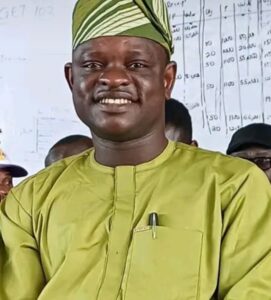
But after watching him in this video passionately discussing the ordeal of the kidnapped schoolchildren and teachers from Oriire Local Government Area, I have been forced to reconsider my assumption.
Something must be wrong with this man. How can a politician who has just suffered a major political disappointment still be speaking with such concern about the welfare of his constituents?
How can he be discussing their rescue, rehabilitation, security and future as though nothing happened to his own ambition?
Is he not supposed to be sulking?
Is he not supposed to have withdrawn into his political cocoon?
Is he not supposed to switch off his telephone, close his doors and tell everyone: “Go and meet those who defeated me”?
Honestly, Senator Fatai Buhari is not behaving normally.
A normal politician should be angry
Let us be sincere with ourselves.
Senator Buhari recently sought the gubernatorial ticket of the All Progressives Congress (APC) in Oyo State. He offered himself to become the party’s candidate, but the political contest did not end in his favour.
He was defeated.
Ordinarily, that should have been enough to provoke a respectable season of political mourning. A normal politician would disappear.
He would stop attending meetings.
He would refuse to answer calls.
He would instruct his supporters to begin insulting everyone on social media. He would suddenly remember all the injustices committed against him since his primary school days.
He would issue a long statement declaring that the party had betrayed democracy, offended humanity and possibly violated the laws of nature. Some would even wait quietly for something terrible to happen so that they could say: “Serves them right. They refused to give me the ticket.”
But Senator Buhari refused to behave like a proper victim of political defeat.
Instead of nursing his disappointment, he returned to the business of representing his people.
Instead of embracing bitterness, he embraced responsibility.
Instead of asking who supported him during the primary election, he asked what could be done to rescue innocent children and teachers from captivity.
Something is certainly wrong with him. Why did he not abandon Oriire?
The kidnapping happened in Oriire Local Government Area, within Oyo North Senatorial District—the constituency Senator Buhari represents.
But that should not have mattered to him after losing the gubernatorial ticket.
At least, that is how politics is often practised in this part of the world.
Once a politician loses a contest, the people must also lose access to him.
Once his ambition is frustrated, public service must be suspended.
Once the party chooses someone else, every community problem should be transferred to the winner.
Senator Buhari should have folded his arms and said: “You rejected my governorship ambition. Let your preferred candidate rescue the victims.” But he did not. He remained on the ground.
He raised the matter in the Senate. He engaged the relevant authorities.
He kept public attention focused on the plight of the victims without recklessly exposing sensitive security operations.
He advocated for coordinated action among security agencies. He continued speaking for the families. And when the victims regained their freedom, he did not rush to claim that he personally entered the forest, wrestled with the kidnappers and carried everyone home on his shoulders.
Instead, he acknowledged the collaborative efforts of the Federal Government, the Oyo State Government, the military, the police, the Department of State Services, Amotekun, local vigilantes, hunters and the communities that provided useful information.
What kind of politician shares credit? No wonder I am worried.He is even asking what happens after the rescue One would have expected Senator Buhari to stop once the victims were released.
After all, the cameras had captured the celebration. The headlines had been written. The political mileage had been obtained. A normal politician would have moved on.
But Senator Buhari began talking about rehabilitation.
He spoke about medical care.
He spoke about psychological support. He spoke about helping the children, teachers and their families recover from the trauma of captivity. He raised questions about the security of schools in rural communities.
He advocated stronger intelligence gathering, perimeter fencing, security posts and closer collaboration among residents, traditional institutions, local hunters, vigilantes and government security agencies.
Haba, Senator! Must you think beyond the television interview? Must you insist that freedom from captivity is only the beginning of recovery?
Must you remind the government that rescued victims are human beings who need care, dignity and support? Something is wrong somewhere.
This is not even his first political disappointment
What makes Senator Buhari’s case more alarming is that this is not the first time he has refused to respond normally to political disappointment.
I recall vividly what happened at the beginning of the Tenth Senate.
Senator Buhari was considered for the position of Senate Majority Leader. By legislative ranking, he had a strong claim to the office.
He had previously served in the House of Representatives.
He was returning to the Senate for a third term. Senator Michael Opeyemi Bamidele, who eventually emerged as Senate Majority Leader, was then beginning his second term in the Senate, though he had also served in the House of Representatives.
Senator Buhari had every reason to feel disappointed.
And in our political culture, disappointment must be properly advertised.
He should have refused to attend plenary.
He should have sat at the back of the chamber with a long face. He should have gathered journalists and complained that his loyalty had been taken for granted.
He should have begun mobilising senators against the leadership.
But what did this strange man do?
The following day, I saw him actively participating in the business of the Senate, moving a motion and making contributions as though nothing had happened. No boycott. No sabotage. No dramatic withdrawal. No anonymous media campaign. No bitterness disguised as a defence of democracy.
He simply returned to work. That was the first evidence that something was fundamentally wrong with Senator Abdulfatai Buhari.
He appeared to believe that the Senate belonged to Nigeria and not to his personal ambition.
What a dangerous idea! A third-term senator still behaving like a servant Senator Buhari is not a newcomer to public office. He served in the House of Representatives and is now serving his third term in the Senate.
By now, he should have mastered the art of political distance. He should be difficult to reach.
His convoy should frighten his constituents off the road. His aides should explain that the senator is permanently in an important meeting.
His office should remember the people only during election seasons.
But reports from across Oyo North present a different picture.
Over the years, he has been associated with interventions in education, healthcare, employment facilitation, water supply, rural electrification, ICT development, youth empowerment, agricultural support and community infrastructure.
He has used his legislative experience to draw attention to the needs of Ogbomoso and Oke-Ogun.
He has participated in the sponsorship of bills, motions, oversight activities and committee assignments affecting both his district and the country.
To cap it all, he facilitated a University to his Senatorial District
As Chairman of important Senate committees over different legislative sessions, he has been involved in national conversations on ICT, cybercrime, land transportation and aviation.
More strangely, he appears to understand that representation is not merely about speaking grammar in Abuja. He seems to believe that a senator must remain connected to the people who sent him there.
This is becoming too much. Public service should not be bigger than ambition.
Our political tradition has taught us something different. When ambition succeeds, serve the people.
When ambition fails, punish them.
When you are given a position, defend the party. When another person is chosen, discover that the party is corrupt. When the crowd praises you, preach loyalty.
When the crowd moves elsewhere, preach revolution.
But Senator Buhari has repeatedly refused to follow this simple political manual. When he did not become Senate Majority Leader, he continued contributing to the Senate. When his gubernatorial aspiration failed, he continued serving Oyo North.
When kidnappers invaded a community within his district, he did not ask which faction the victims’ parents supported.
He responded as their senator. This is abnormal.
He is separating personal ambition from public obligation.
He is behaving as though an election defeat does not cancel an existing mandate. He is acting as though the people must not suffer merely because a politician has suffered disappointment.
He even appears to believe that a man can lose a contest without losing his character.
Who taught him this kind of politics?
He refused to turn security into a comedy show
There is another worrying aspect of Senator Buhari’s conduct.
During the kidnapping crisis, he did not recklessly reveal sensitive details of the rescue operation merely to prove that he was working.
He understood that national security is not a comedy show.
He recognised that carelessly broadcasting operational intelligence could endanger the victims and security personnel. He demanded action, accountability and urgency, but he did not insist that every strategy should be announced on television.
This is not the popular style.
The fashionable approach is to shout first and think later. It is to disclose every rumour, publish every unverified claim and turn the suffering of families into content for political entertainment.
Senator Buhari refused to dance to that gallery.
He combined advocacy with discretion. He demanded results without converting the operation into a personal publicity circus.
Again, something is wrong with him.
Perhaps the problem is character. Maybe Senator Buhari’s problem is that he has allowed character to interfere with politics.
Perhaps he does not understand that some people see public office as a personal investment from which every political dividend must flow directly to them.
Perhaps he believes representation is a covenant rather than a transaction.
That may explain why he continued working after losing the Senate leadership position.
It may explain why he remained active after losing the governorship ticket.
It may explain why he stood with the people of Oriire during one of the darkest moments in the history of the district.
It may explain why he spoke about the victims not as statistics, but as children, teachers, parents and human beings deserving rescue, treatment and rehabilitation.
It may also explain why he shared credit with others instead of decorating himself as the sole hero of the rescue operation.
Yes, I have finally discovered what is wrong with Senator Abdulfatai Omotayo Buhari.
That is his problem.
Something is truly wrong with him
Senator Buhari has lost political contests, but he has refused to lose his composure.
He has suffered disappointment, but he has refused to transfer his pain to his constituents.
He has been denied positions he was qualified to occupy, but he has refused to deny his people the service they elected him to provide.
He has demonstrated that leadership is not only revealed by how a man behaves when he wins.
It is better revealed by how he behaves when he loses.
So, yes, something is wrong with Senator Abdulfatai Omotayo Buhari.
He is too mature to sabotage the system because he did not get a position.
He is too responsible to abandon his constituents because he lost a primary election.
He is too humane to ignore kidnapped children and teachers because of wounded political ambition.
He is too committed to allow personal disappointment to overpower public responsibility.
In a political environment where bitterness is often mistaken for courage and selfishness is packaged as principle, Senator Buhari has committed an unforgivable offence: He has chosen to remain faithful to his people. Haba, Senator! This is not how some politicians behave. But this is exactly how responsible leadership should behave. God bless the day he was born.


About The Author