 pannigeriannews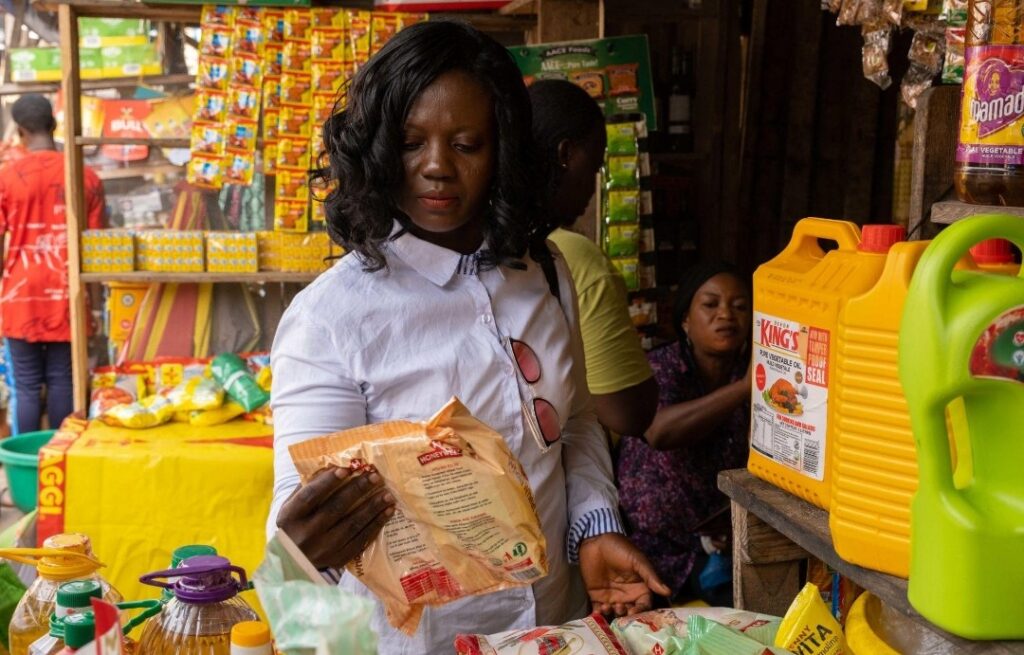
By Priscilla Iyabo Awojuola
There was a time when Nigerians complained about the cost of living.
Today, many are no longer complaining.
They are calculating.
Calculating what to remove from the shopping list. How to stretch a salary until the next one. Whether to pay school fees, settle the electricity bill, buy food, or respond to an urgent request from a relative. For many families, life has become one long exercise in arithmetic.
Perhaps no one captured the Nigerian ability to endure hardship with a smile more memorably than the late Afrobeat maestro, Fela Anikulapo Kuti, in his 1978 song, “Shuffering and Shmiling”.
Fela was singing about hardship and the peculiar Nigerian response to it decades ago, when economic circumstances were different.
His music was social commentary, using rhythm, satire, and provocation to question the conditions under which Nigerians were expected to live.
Nearly five decades later, the title still sounds painfully familiar. Only this time, the mathematics has changed.
WHAT ₦100,000 MEANS TODAY
I recently went to the market with ₦100,000.
Not long ago, that amount would have felt substantial enough to stock a household with food for weeks, perhaps even a month, depending on its size.
This time, I watched the money disappear.
Rice.
Beans.
Garri.
Meat.
Vegetables.
Oil.
Seasonings.
A few other essentials.
By the time the shopping was over, what I had bought could barely be described as a major stock-up.
It was enough for several days. Perhaps a little longer.
That experience forced a question no economic statistic can quite convey: When did ₦100,000 stop feeling like money?
The trader is not necessarily the villain. She is buying at a higher price, too.
The farmer has production costs. The transporter has fuel costs. The wholesaler has logistics costs. The retailer has to make a margin.
Somewhere along the chain, the consumer receives the final bill.
And consumers are increasingly discovering that the money in their wallets and the value of goods on the shelves no longer speak the same language.
FROM “SHURFERING” TO CALCULATING
Fela’s Shuffering and Shmiling emerged from a Nigeria in which hardship, inequality, and political frustration were already subjects of intense public debate. His official catalogue describes the song as a critique of how Nigerians were encouraged to endure suffering while powerful institutions and elites benefited.
But today’s reality introduces another dimension.
We are not simply suffering and smiling.
We are suffering, smiling, and calculating.
We calculate before entering the supermarket.
Before accepting an invitation.
Before travelling.
Before having another child.
Before helping a relative.
Before going to the hospital.
Before replacing a damaged phone.
Before buying a new pair of shoes.
Before buying fuel.
And sometimes, before eating.
A woman enters the market with what she believes should be enough to feed her family for a week. She returns with half of what she intended to buy.
The landlord wants his rent.
The school wants its fees.
The mechanic wants his money.
The transport operator has his own costs.
The electricity bill arrives.
The relative asking for assistance does not know that the person answering the phone is also struggling.
Everybody is asking for something.
Everybody is trying to survive.
THE MARKET DOES NOT LIE
There is something humbling about standing in a Nigerian market with a fixed amount of money. The market has no sympathy for yesterday’s prices.
You can remember what a bag of rice used to cost. What a bottle of cooking oil used to cost. When buying provisions meant filling the basket rather than deciding which items must be returned to the shelf. But nostalgia does not reduce today’s bill.
The National Bureau of Statistics continues to record significant food-price pressures, with its August 2026 data showing food inflation at 20.31 per cent on its current Consumer Price Index series.
Behind that percentage is the woman standing before a tomato seller, quietly removing items from her basket.
It is the father who has stopped buying certain foods because they have become too expensive.
The pensioner deciding whether to buy medicine or food.
The young couple postponing plans because setting up a home has become daunting.
The salary earner whose take-home pay is no longer enough to cover the bills.
Behind every percentage is a person.
Behind every number is a family.
WE HAVE BECOME VERY GOOD AT LOOKING FINE
This is perhaps one of the most remarkable things about Nigerians.
We still celebrate.
We still attend weddings.
We still throw birthday parties.
We still dress beautifully.
We still take photographs.
We still dance.
We still say, “God is good.”
And He is.
But behind the aso-ebi, the owambe, the laughter, and the photographs are calculations nobody sees.
How much did this outfit cost?
How much is transport?
Can I afford another ceremony next weekend?
Should I contribute to this celebration when there are outstanding bills at home?
Can I travel for this event?
Can I afford to host one myself?
We have become remarkably good at looking fine. Perhaps that is why Fela’s old musical question still resonates.
Not because Nigeria is exactly the same country it was when he sang it, but because the Nigerian capacity to endure remains familiar.
The difference is that today’s household is increasingly being forced to ask how much endurance it can afford.
SURVIVAL CHANGES PEOPLE
Prolonged hardship does not only empty pockets.
It changes behaviour.
It shortens patience and quickens tempers. It makes generosity more difficult and people more suspicious of one another. It can make a person measure relationships by what they provide.
It can turn a once-generous neighbour into someone who must first calculate whether helping another person will jeopardise his own household.
That is where the economic story becomes a social story.
What is prolonged survival doing to us as a people?
Survival has consequences.
When a society spends too long trying simply to get through the month, dreams become smaller.
People stop asking, “What do I want to become?”
They begin asking, “How do I get through this month?”
That is a dangerous transition.
A society should aspire to more than survival.
THE NUMBERS AND THE PEOPLE
The scale of the problem is difficult to ignore.
The International Monetary Fund reported in June that poverty remained widespread, with an estimated 63 per cent of Nigerians below the national poverty line and about 27 million people estimated to have faced food insecurity in late 2025.
The World Bank has similarly reported that more than 60 per cent of Nigerians were estimated to be living below the national poverty line in 2025 and noted that poor households can spend as much as 70 per cent of their income on food.
Yet there is another side to the story.
The IMF also says recent reforms have strengthened macroeconomic stability and resilience and projects economic growth of about 4.1per cent in 2026.
Both realities can exist at the same time.
An economy can improve on important indicators while households continue to feel severe pressure.
That distinction matters.
The ultimate test of an economy is not simply what the statistics say.
It is what happens in the kitchen.
What happens in the market.
What happens when a child needs school fees.
When someone falls sick.
When the rent becomes due.
When ₦100,000 goes to the market and returns looking embarrassingly small.
WE MUST NOT NORMALISE HARDSHIP
There is dignity in resilience.
There is strength in the Nigerian who keeps going. Something admirable in the parent who wakes up every morning and tries again. But resilience should not become an excuse for permanent hardship.
A society can not continually ask its citizens to be resilient without asking why so many citizens have so much to endure. We must be careful about the society we are becoming.
A society where a parent quietly skips dinner so the children can eat.
Where young people postpone marriage because they can not imagine affording a home.
Where graduates work endlessly but remain unable to build a secure future.
Where the elderly depend on children who are themselves barely coping.
Where everybody is struggling, yet everybody is expected to pretend that everything is fine.
Fela sang about shuffering and shmiling in another Nigeria.
Today, perhaps, we have added another word:
Calculating.
We calculate the food.
The fuel.
The rent.
The school fees.
The transport.
What remains.
And then, somehow, we smile.
There is something beautiful about that resilience.
But there is also something troubling about a society becoming so accustomed to hardship that hardship begins to look normal.
There is dignity in surviving.
But there should also be dignity in living.
That is the conversation we need to begin having—not merely about how Nigerians can survive the next increase in the price of food, fuel, transport, school fees or rent, but about how to build a society in which survival is no longer the highest achievement of the ordinary citizen.
Fela gave an earlier generation a soundtrack for its frustrations.
Perhaps our generation needs to listen again—not merely to remember the music, but to ask why some of the questions behind it still sound so familiar.
The society we are becoming should not be one in which the greatest measure of success is simply making it to the end of the month.
We should be building a society in which people can do more than survive.
They should be able to live.


About The Author