
 pannigeriannews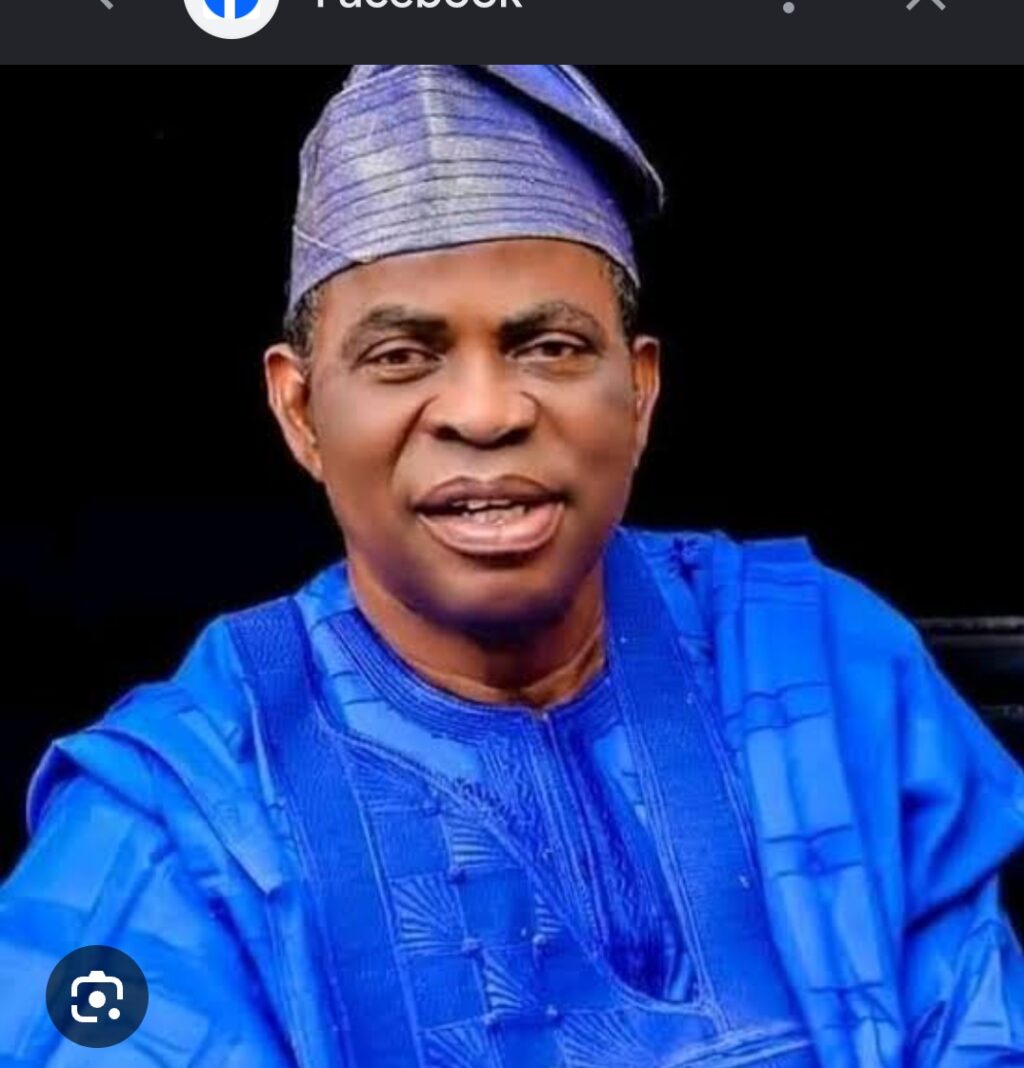
By Smolette Shittu-Alamu
Since the first of June this year, and even long before then, the football world had looked forward to the 19th of July with so much anxiety and hope. The day had looked very far away then. But football pundits, at best, had all been only speculative in their views. That was brought about via permutations, all because of the pedigree of teams. Now, that expected date—July 19, 2026—is almost here with us. A few hours, in fact less than 48, separate us from that much-expected day.
The 23rd FIFA World Cup finals will come to an end on Sunday, July 19. By the time Spain meets Argentina in the final match in New York, a total of 104 football matches would have been played among the 48 national teams that participated in the tournament. When the curtains fall this Sunday, New York, the business capital of the United States of America, will become the cynosure of attraction for the entire world. It promises to be a classic encounter between the defending champions and the former world champions who last ruled the football world in South Africa in 2010.
Four years ago, Morocco carried Africa’s banner into the semi-finals for the first time ever. Before then, Ghana had reached the quarter-finals. The Asamoah Gyan-led Black Stars would have become the first African team to qualify for the World Cup semi-finals if Uruguay’s Luis Suarez had not deliberately stopped a goal-bound shot with his bare hands. Had the Video Assistant Referee (VAR) existed then, history might have been different. Ghana was awarded a penalty, but captain Asamoah Gyan blasted it over the bar. Suarez still jokingly refers to that incident as the “second Hand of God,” the first being Diego Maradona’s infamous handball in 1986.
Until FIFA expanded the competition from 32 to 48 teams and increased the groups from eight to twelve (Groups A-L), the World Cup had always been played within one month. Now, the tournament spans 39 days—about five weeks. Going forward, Africa will be represented by ten teams every four years. On this, FIFA deserves commendation.
For 39 days, the 23rd FIFA World Cup has positively impacted the football world. Co-hosted by Mexico, Canada and the United States, the tournament has been action-packed and filled with excitement. It has also brought to the fore the brilliance of several emerging football stars whom the world will undoubtedly watch closely in the years ahead.
The tournament also showed that so-called minnows no longer fear football’s traditional giants. Germany, the Netherlands and Uruguay all suffered surprisingly early exits.
As 102 of the 104 matches have already been played, only the third-place match between England and France and the grand finale between Spain and Argentina remain.
Curacao, a nation of just 150,000 people, surprised many by holding Germany to a 1-1 draw before eventually losing. Cabo Verde, another debutant from West Africa, also impressed by remaining unbeaten until meeting Argentina in the Round of 32. They pushed the defending champions into extra time before eventually losing in the 111th minute. Young Cabo Verdean midfielder Lopez Cabral emerged as one of the tournament’s brightest prospects.
The World Cup also exposed a recurring weakness in African football—poor game management. Senegal surrendered a 2-0 lead to Belgium and lost. Egypt also threw away a two-goal advantage against Argentina to lose 3-2. DR Congo led England until the 75th minute before eventually losing 2-1. Poor concentration, tactical errors and weak game management continue to hinder African teams.
These shortcomings must be addressed if Africa is to compete successfully at the highest level. Among the tournament’s emerging stars were Canada’s Jonathan David, America’s Folarin Balogun, and Africa’s Ismaila Sarr, Ronwen Williams and Amad Diallo. Impressively, of the ten African teams that qualified for the World Cup, only Tunisia failed to reach the knockout stage. Unfortunately, only Morocco advanced as far as the quarter-finals.
The outcomes of the semi-finals did not favour my expectations. I had supported France and England because I wanted an all-European final. Argentina, in my opinion, has dominated world football for too long. From Mario Kempes, Diego Maradona, Gabriel Batistuta, Angel Di Maria and Lionel Messi to today’s stars like Enzo Fernandez, Nicolas Otamendi and Lautaro Martinez, Argentina has consistently produced winners. England, under Thomas Tuchel, found this too difficult to overcome.
We must also acknowledge that this World Cup has been one in which several ageing stars continued to shine. Cristiano Ronaldo, Lionel Messi, Luka Modric, Mohamed Salah, Neymar, Vozinha and Yassine Bono may all be making their final World Cup appearances. Their likely departure from the global stage after this tournament is emotional for football lovers.
However, Argentina must also be criticised for making political statements after their semi-final victory by declaring that the Falkland Islands belong to them. Football should remain above politics. The world is well aware of the historical dispute over the islands and the 1982 conflict between Argentina and Britain.
England, meanwhile, appeared to lose concentration after taking the lead and forgot that Argentina possesses players capable of changing any game. Had England survived the Argentine pressure, this year’s final would have been an all-European affair. The famous “It’s Coming Home” anthem might have echoed once again. But that opportunity has passed.
Argentina now stands on the brink of history. As defending champions, they are seeking back-to-back World Cup titles, something no nation has achieved since Brazil won consecutively in 1958 and 1962. Can they do it? Spain, however, appears determined to prevent that.
It has been 16 years since Spain’s historic triumph at the 2010 FIFA World Cup. Sixteen years later, La Roja has another opportunity to reclaim football’s greatest prize. While a successful Argentine defence of the title would provide a fitting farewell to Lionel Messi, Spain appears equally poised to write a new chapter in football history.
Sunday, July 19, will reveal the answer.
We believe FIFA should sanction the Argentine team for introducing politics into football after last Wednesday’s semi-final. While we do not advocate their disqualification from the final, such conduct deserves condemnation and appropriate punishment. It has already cost them support among many fans.
As the curtain falls on what has been a highly successful FIFA World Cup, football lovers across the globe can only hope for a memorable and fitting final between Spain and Argentina.
Shittu-Alamu, a renowned sports analyst, writes from Osogbo, Osun State.


About The Author