Let the records speak: What has Hon. Olamijuwonlo Alao-Akala done in the 10th Assembly?
 pannigeriannews
8 min read
pannigeriannews
8 min read
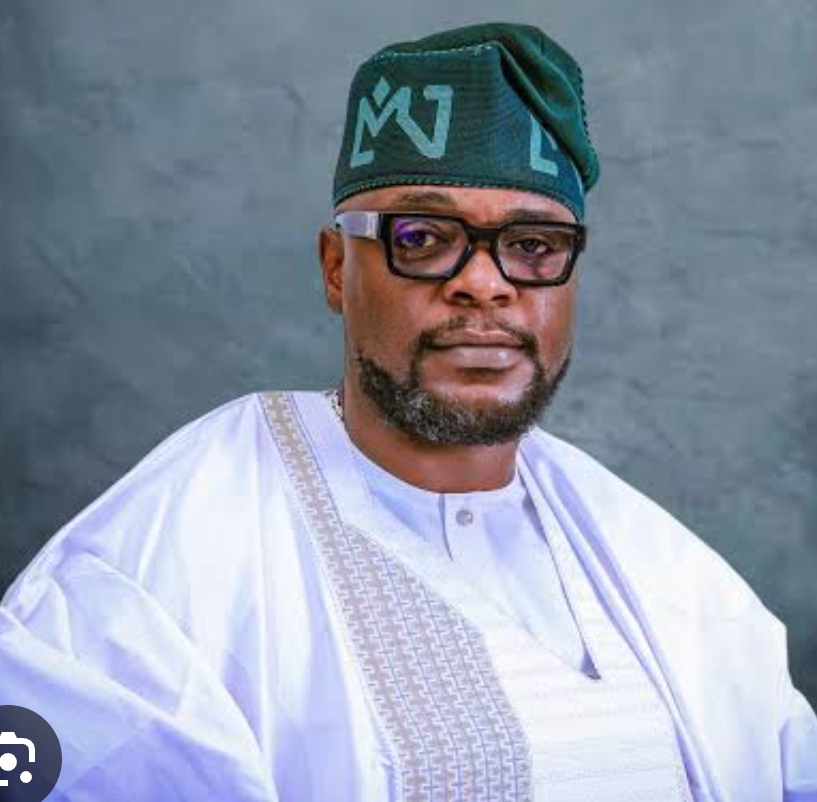
There is no political throne. The mandate belongs to the people. And because the mandate belongs to the people, the performance of every elected representative should be open to scrutiny, questions, verification and, ultimately, the judgment of the electorate.
That is why claims that Hon. Olamijuwonlo Ayodeji Alao-Akala has “done nothing” in the 10th National Assembly deserve to be tested against the available records.
The 10th Assembly is still in session, meaning any assessment at this point is necessarily an interim assessment, not a final scorecard. But there are already parliamentary records, official legislative documents, media reports and reported constituency interventions that provide material for such an assessment.
So, what exactly has the member representing Ogbomoso North, Ogbomoso South and Oriire Federal Constituency done since his election in 2023?
The legislative record
On the floor of the House of Representatives, Alao-Akala has sponsored a number of Bills covering issues ranging from corporate regulation and price control to security, healthcare, constitutional reform, artisan development and agricultural processing.
Among the Bills recorded under his name are the Companies and Allied Matters Act (Amendment) Bill, 2023 (HB.924) and the National Price Control Commission (Establishment) Bill, 2023 (HB.925).
He also sponsored the Armed Forces Act (Amendment) Bill, 2024 (HB.1136), the Nigeria Surrogacy Regulatory Commission Bill, 2024 (HB.1137) and a Constitution Alteration Bill, 2024 (HB.1138).
The surrogacy legislation subsequently moved beyond first reading and proceeded to second reading before being referred to the appropriate committee.
In 2025, his legislative record expanded further with the Federal Medical Centres Act (Amendment) Bill, 2025 (HB.2373) and the Mango and Cashew Processing Plant (Establishment and Regulation) Bill, 2025 (HB.2459).
The latter focuses on agricultural processing and value addition, while another legislative initiative, the National Artisans’ Registration and Certification Council Bill, seeks to establish a framework for registering, regulating and certifying artisans in Nigeria.
The legislative record therefore cannot reasonably be reduced to an assertion that no Bills have been sponsored.
But sponsoring a Bill is not the same thing as making it law. That distinction matters.
A proper assessment should therefore ask which Bills have passed second reading, which have reached committee stage, which have progressed further and which have stalled.
From road safety To Ogbomoso’s infrastructure
One of the early issues associated with Alao-Akala’s legislative intervention was road safety. In July 2023, he moved a motion calling for the provision of first-responder services to victims of road accidents on Nigerian highways.
The House adopted the motion as amended and referred it to relevant committees. The motion called for the training and deployment of first responders, a toll-free emergency line and the provision of equipped ambulances at specified intervals along major and minor highways.
The issue subsequently informed a Bill seeking to amend the Federal Road Safety Commission Act to provide for first-responder services and emergency attention to accident victims.
His constituency-related motions have also included calls for action on the Ogbomoso Power Station, the problem of out-of-school children and the improvement of National Identification Number services.
On roads, the House adopted a motion sponsored by Alao-Akala seeking urgent rehabilitation of the Caretaker–Seminary Road in Ogbomoso, with the Ministry of Works and FERMA urged to provide work and maintenance plans and supervise execution.
That is parliamentary representation in action: identifying a constituency problem, placing it before the national legislature and seeking intervention from the relevant federal agencies.
But again, the motion itself should not be confused with the completion of the road. The actual implementation remains a matter to be independently verified.
Security and the Oriire school abductions
Security has also become a major part of the lawmaker’s constituency advocacy.
Following the abduction of pupils and teachers from schools in Oriire Local Government Area in 2026, Alao-Akala brought the matter before the House through a motion of urgent public importance.
The House subsequently called for the urgent rescue of the abducted pupils and teachers. Reports of the proceedings also show that Alao-Akala called for broader security reforms, including state police and the establishment of military forward operating bases in the affected areas.
Before the motion, he had also called for a military base in Oriire following the school attacks.
Whether such interventions ultimately produce the desired security improvements is another question. Legislative advocacy can draw federal attention to a problem, but the responsibility for actual security operations rests primarily with the relevant security agencies.
That distinction should remain part of any honest assessment.
Committee responsibilities
Alao-Akala’s parliamentary responsibilities go beyond plenary debates.
Available records identify him as Chairman of the House Committee on Youths in Parliament and Chairman of the Young Parliamentarians Forum of the 10th National Assembly.
He has also served as Deputy Chairman of the Ad-hoc Committee on Internal Security, while serving on committees covering areas including Oil Theft and Losses, Youth Development, Capital Market and Institutions, National Planning and Development, Works, Judiciary, Public Service Matters and TETFUND.
These assignments are relevant because much of the work of a federal legislator takes place away from the television cameras and beyond speeches on the floor.
Committees conduct oversight, examine government programmes, consider budgets, scrutinise agencies and participate in the legislative process.
His reported participation in higher-education and TETFUND oversight activities also falls within this broader parliamentary responsibility.
What about constituency projects?
This is where the debate becomes more complicated. There are numerous reports of constituency interventions attributed to Alao-Akala, including roads and drainage, classroom blocks, educational support, healthcare interventions, boreholes and empowerment programmes.
For example, reports in 2026 confirmed the commencement of rehabilitation and construction of about 600 metres of Abogunde Road, off Pakiotan, in Ogbomoso North.
Other reported constituency interventions include six blocks of classrooms at Ikoyi Grammar School in Oriire and two blocks of classrooms at Oolo, as well as educational support involving JAMB and WAEC candidates.
These interventions have been reported in media accounts and materials associated with the lawmaker, but individual projects should still be independently verified in terms of location, funding source, contractor, implementation status and commissioning.
There are also reports of borehole projects, medical outreaches, eye-care interventions and other health-related activities across the constituency.
The same applies to empowerment programmes. Reported interventions include ICT training, distribution of laptops and certificates, vocational training, solar installation and electrical skills training, agricultural and agro-processing programmes, fishery and poultry support, tailoring and fashion training, and distribution of starter equipment.
Reports have also documented support to artisans, including a reported ₦5 million intervention for Ogbomoso artisans, alongside the distribution of sewing machines, hairdressing equipment, grinding machines, motorcycles and other business-support items.
There are also reported programmes involving agricultural training, including fish and poultry production, as well as youth-oriented ICT programmes conducted with partner organisations.
These are not matters that should simply be accepted or rejected because of political allegiance.
The right approach is verification. Where is each project? Who funded it? How much was appropriated? Who implemented it? When did implementation begin? What is the current state of the project? Who are the beneficiaries? And, most importantly, can the evidence be independently established?
The job of a federal lawmaker
This point is often lost in political arguments. A member of the House of Representatives is not a governor.
He is not a minister. He is not a local government chairman. His constitutional responsibilities primarily revolve around legislation, representation and oversight.
A federal legislator sponsors and debates Bills; moves motions; represents constituency interests; scrutinises government policies and expenditure; participates in committees; conducts oversight of Ministries, Departments and Agencies; and raises matters affecting constituents before the Federal Government.
A legislator may facilitate or advocate for a road, school, healthcare facility, empowerment programme or other federal intervention. But the actual execution of a federal project is ordinarily the responsibility of the relevant Ministry, Department or Agency.
That distinction is important. It means that constituency projects should not automatically be presented as if the legislator personally constructed every project with his own resources.
At the same time, a representative who claims to have facilitated a project should be prepared to show the appropriation, agency responsible, project location, implementation status and evidence of follow-up. That is what accountability should look like.
The record is not the end of the conversation
There are also interventions contained in federal budgets for 2025 and 2026 that are reportedly yet to be implemented.
That raises another legitimate question: what happens to projects that have been appropriated but have not yet been executed?
The answer should not be political rhetoric.
The public deserves to know what was approved, what has been released, what has been implemented, what is ongoing and what remains outstanding.
For every such intervention, the relevant questions should include:
What was appropriated?
Which Ministry, Department or Agency is responsible?
Where is the project located?
What is the implementation status?
Who are the beneficiaries?
How much has been released?
What has the representative done to follow up?
And, above all:
What is the evidence?
Should Alao-Akala be questioned?
Absolutely. Unfinished projects should be questioned. The cost and funding sources of projects should be made public. The number of beneficiaries should be verifiable. Bills and motions should be followed beyond first reading to determine their actual outcomes.
Constituency interventions should be independently checked. More jobs, economic opportunities, infrastructure and social interventions should be demanded.
Those are legitimate expectations from anyone holding public office.
But the opposite claim — that “nothing has been done” — should equally meet the test of evidence.
The available parliamentary record establishes that Alao-Akala has sponsored Bills and motions, participated in House committees and taken constituency issues, including road infrastructure and security, to the national legislature.
The reported constituency interventions provide another body of evidence, but those projects deserve the same scrutiny: documentation, physical verification, funding details and implementation status.
That is a more useful debate than political name-calling.
A challenger is perfectly entitled to say: “Here is what I will do differently.”
That is a legitimate political argument.
It is different, however, from saying: “Nothing has been done.”
Let the people decide On the record
The question should therefore not be whether Alao-Akala is beyond criticism.
He is not.
Nor should the question be whether every intervention attributed to him has been perfect.
That would require evidence project by project.
The more useful question is whether his record can withstand public scrutiny.
There is enough on the record to make a serious examination possible.
There are Bills to track.
There are motions to follow.
There are committee responsibilities to assess.
There are constituency projects to verify.
There are empowerment programmes to document.
There are budgetary provisions to monitor.
And there are outstanding interventions for which explanations should be demanded.
That is what accountability should mean.
Let the incumbent defend his record.
Let challengers present their plans.
Let projects be verified.
Let Bills and motions be tracked to their outcomes.
Let public money be accounted for.
And let the people who own the mandate examine the facts and make their own informed decision.
Let the records speak.


About The Author