Remembering Aare Abdulazeez Arisekola Alao after 12 years || Lanre Gbadamosi
 pannigeriannews
4 min read
pannigeriannews
4 min read
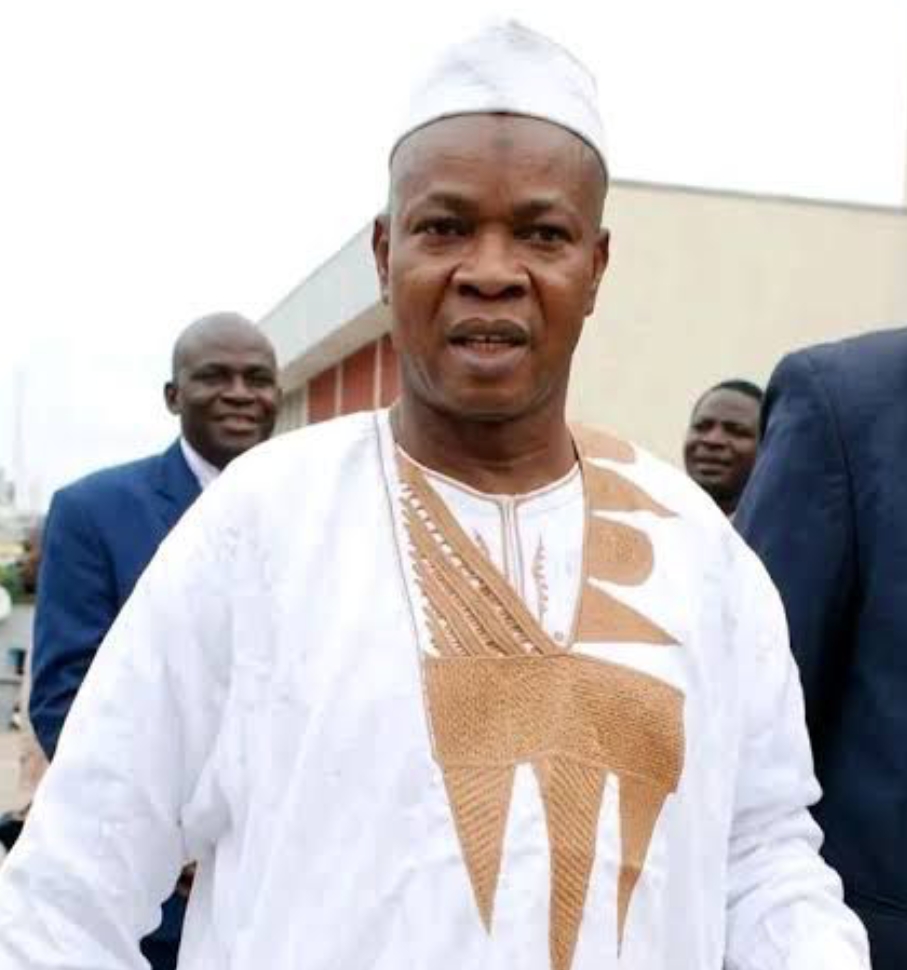
By Lanre Gbadamosi
The ancient city of Ibadan has always known how to honour her heroes — both while they breathe and after they join the ancestors. From the ancient period, the city never let greatness go unnoticed. Think of Baṣọrun Ogunmọla, whose courage defined Ibadan’s wars in the 19th century. Even after he transitioned in 1862,the city sang his deeds.
Think of the 12th Aare Ona Kakanfo, Latoosa, whose name became a proverb “A kì í jẹ́ kí ohun tó ńbẹ lọ́wọ́ Latoosa ó fọ́wọ́ ẹlòmíràn” (“what is in Latoosa’s hand cannot get into another’s hand). Ibadan buried the man but kept the legend alive in oríkì, in streets, and in memory.
That is the Ibadan way.
Twelve years after his passing, the city is still doing the same for one of her finest modern icons,Aare Abdulazeez Arisekola Alao, the first Aare Musulumi of Yorubaland,who died on 18th June 2014 at age 69 in London.
I never had the privilege of meeting the Aare one-on-one.
My encounter with him was from a distance. Yet distance did not stop his presence from shaping me. My first “distance encounter” came through music.
In Chief Commander Ebenezer Obey Fabiyi’s evergreen track “Eiye Tó Bá Fara We’gun” released in the 1970s but which I listened to in the 90s through my father,an ardent fan of Baba Commander.Chief Commander captured a young, bubbling Ibadan socialite ‘ Aiyekoto“ Oyinbo Oni Datsun “ Oke’badan dahunsi, Arisekola dahunsi si.”
The lines were meticulously constructed with the rhythm of the time, during the ‘Datsun and Lister motors’ era, when modest lifestyle and sharp dressing defined Ibadan’s high society.
The serenation told me this was a man already marked for greatness long before he was turbaned at age 35 as Aare Musulumi by the league of Imams and Alfas in 1980.
Signaling Ibadan had spotted her son early.
Other numerous encounters was at Agodi praying ground during Eid. I watched from a distance and closely as the Aare moved through the crowd. Small in stature, but carrying himself with a weight that filled the entire field. His accommodating nature was visible even to strangers.
He did not need to shout to command respect. Ibadan men like him earn it through presence, open door policy ,through generosity, through how they treat the least person in the crowd.
That humility, mixed with authority, was his signature.
Arisekola’s name became entangled with power because he moved with power. His romance with military men was never about blind loyalty. It was about friendship,access and influence for Ibadan and for the downtroden .
Another ‘distance encounter ‘ was during the turbulence of June 12,he made newspaper headlines,he became a victim of the agitation,his role was misconstrued. Critics painted him as “anti-democracy” because he was close to the corridors of power.He was not spared.His property on Ring Road, which housed his Monitor newspaper, and eleven cars parked in the premises were completely set ablaze,while his multi-million naira flour mill,lister was however prevented from being razed.
Another incident was at the 50th convocation of the university of Ibadan.Where six cars in his convoy were destroyed by angry students.He escaped death by a whisker .
But still,he never denied his friends.
Those who knew him understood the complexity.He was a bridge-builder in a time when bridges were being burned. He was also involved in politics without ever joining a political party,a rare art. He influenced outcomes, settled disputes, and opened doors, all while remaining above partisan labels. Whether history agrees or disagrees with his choices, one fact remains,he always put Ibadan and his people at the center of the negotiation.
As Aare Musulumi, he did more than wear the title and alukinba.He built mosques, funded Islamic education, settled communal disputes, and used his wealth to lift others.He was an outstanding Ibadan man in the true sense,proud of his roots, unashamed of his faith, and never too big to come home.
Twelve years later, the seat of Aare Musulumi of Yorubaland is still filled, but Ibadan has not found “another Arisekola.” Charisma, wealth, and humility rarely come together in one man.
He was a bridge between worlds. He could sit with generals in Dodan Barracks in the morning and sit with artisans at Oje Market in the evening, and both would feel he belonged to them.Today’s leaders often pick one world. Arisekola lived in both.
Arisekola embodied the Ibadan spirit,bold, direct, generous, and fiercely loyal to home. He did not run from controversy, but he never abandoned his people. That kind of rootedness is hard to replicate.
Ibadan produces leaders every day. But Arisekola was not just a leader. He was a phenomenon,a man whose name became part of the city’s soundtrack, part of its Eid memories, part of its political folklore.
As we mark 12 years without him, Ibadan still honors him the way she honors all her heroes,by refusing to forget.
The drums still say “Arisekola dahunsi si.”
The praying grounds still remember his gait.
And the city waits, knowing that replacements can be appointed, but legends like Arisekola are born once.
Sun re o, Aare.
Ibadan will keep your name alive until the next iroko rises.
…Lanre Gbadamosi, public affairs analyst, author and editor, writes from Ibadan


About The Author