
Beyond the half salary: What the numbers say about Aregbesola’s eight years in Osun
 pannigeriannews
9 min read
pannigeriannews
9 min read
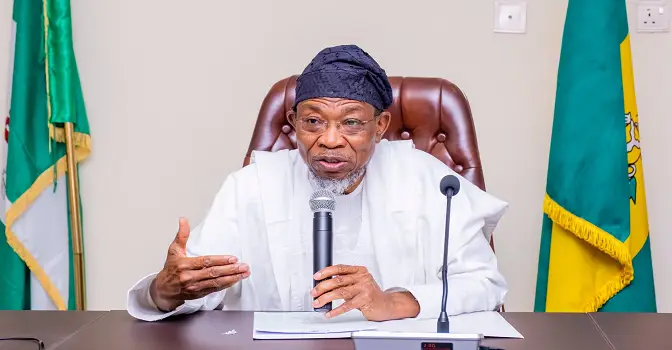
By Rasheed Adebiyi, PhD
Since the conclusion of the 2026 Osun State governorship election, a familiar argument has gained renewed momentum in public discourse, particularly among young men and women on social media: that the APC lost the election because of its perceived unfriendly posture towards workers and their welfare.
The argument is straightforward. “The APC did not treat workers well. Remember the half-salary era. Workers and their families suffered. That is why Osun rejected them.”
It might have remained another post-election political argument, except that it received an unexpected boost when President Bola Ahmed Tinubu, while receiving Governor Ademola Adeleke at the Presidential Villa after his victory, also referred to the experience of Osun workers under the previous APC administration.
That presidential reference has given the argument a new level of political and public relevance. It raises an important question: How much did the memory of the half-salary years influence the 2026 election, and what does the historical record actually tell us about the period?
There is, however, a danger in remembering governments primarily through their most painful moments. The suffering of workers during the salary crisis was real, and it should neither be minimised nor explained away. But eight years of government cannot be adequately understood through one policy, one crisis or one political narrative.
The Aregbesola years were also a period of ambitious infrastructure development, social intervention, education reforms, revenue mobilisation and significant public expenditure. They were equally years in which Osun’s finances came under severe pressure as federal allocations declined, Nigeria entered an economic crisis and the state’s obligations became increasingly difficult to sustain.
To understand how the “half-salary” experience became such a powerful political memory and whether it was sufficient to shape the APC’s fortunes in 2026 we therefore need to go beyond the political rhetoric and return to the numbers.
What happened to Osun’s finances? How much was spent on workers, infrastructure and social programmes? What changed when federal revenues collapsed? What choices did the government make? And, ultimately, was the salary crisis a consequence of an anti-worker posture, a national economic shock, fiscal choices made by the administration or a complicated combination of all three?
Those questions are worth asking not to rewrite history, but to understand it.
The Osun Aregbesola inherited
When Aregbesola assumed office in November 2010, Osun was not a wealthy state with a large independent revenue base. It was a time when the state was laregely described as the Civil Service state.
The administration said it inherited about N18.3 billion in debt and a situation in which the state was borrowing monthly to meet salary obligations. That claim came from the government and should therefore be treated as part of the administration’s account of its inheritance. What is less disputable is that Osun’s fiscal capacity was limited and heavily dependent on federal transfers.
That dependence would become critical a few years later. The early years, however, were not defined by salary arrears.
The administration pursued an ambitious development programme while attempting to improve internally generated revenue. Osun’s official accounts and contemporary government records show substantial spending on education, roads, urban renewal, health, youth employment and social programmes.
The education reforms became particularly prominent. The government embarked on the construction of model schools, introduced school feeding programmes, provided uniforms, paid examination fees and distributed the Opon Imo learning tablets.
Infrastructure was another major component. The government pursued road construction and rehabilitation across the state, including major inter-city and township roads. The scale of the ambition was substantial for a state with a relatively small revenue base.
The model appeared straightforward: expand the state’s economic and physical infrastructure, improve revenue generation and use borrowing and available public funds to accelerate development. For a period, it seemed possible. Then the economic environment changed.
When the numbers turned against the government
One of the clearest ways to understand the crisis is to follow statutory allocations. Osun’s own Medium-Term Expenditure Framework shows that statutory allocation rose to approximately N39.76 billion in 2013. It then fell to N36.16 billion in 2014, N25.67 billion in 2015 and just N18.59 billion in 2016. In other words, between 2013 and 2016, statutory allocation fell by more than half. That was devastating for a state so dependent on federal transfers.
The wider Nigerian economy was experiencing an equally dramatic shock. The collapse in global oil prices from late 2014 severely affected federal revenues, which in turn affected states. The World Bank noted at the time that most Nigerian states depended heavily on Federation Account allocations and that more than ten states had accumulated salary arrears.
Nigeria subsequently entered recession in 2016. Osun was therefore not an isolated case. But the national crisis does not completely settle the question of responsibility. It raises another one: Had Osun’s spending commitments become too large for its revenue capacity even before the crisis fully arrived? The evidence suggests that they had.
The unfrastructure gamble
Osun’s expenditure figures reveal the scale of the government’s development ambition. Actual capital expenditure was approximately N46.5 billion in 2012 and an extraordinary N82 billion in 2013. Then came the contraction. Capital expenditure fell to approximately N23.6 billion in 2014, N17.9 billion in 2015, N28.4 billion in 2016 and N23.9 billion in 2017.
The pattern is instructive. The government did not simply continue spending on infrastructure at the same level while refusing to pay workers. When revenue collapsed, capital expenditure itself was substantially squeezed. But the commitments created during the expansionary years remained.
At the same time, personnel expenditure remained substantial. Actual personnel expenditure was about N18.65 billion in 2012, N12.78 billion in 2013, N32.58 billion in 2014, N33.29 billion in 2015, N36.84 billion in 2016 and N38.26 billion in 2017, according to the state’s fiscal documentation. The implication is significant.
Osun was carrying both a large recurrent obligation and the legacy of an ambitious capital programme at the precise moment its revenue base was collapsing. That is where the fiscal model began to break.
Workers were not always the losers
This is an important part of the story that is frequently forgotten. The administration’s own records show that workers received full salaries in the early part of the crisis. According to the state’s account of its bailout disbursement, salaries were paid in full through June 2015. The government then began using bailout funds and other revenue to augment salary payments.
The government had requested more than N64.3 billion from the Central Bank of Nigeria to cover outstanding salaries, pensions and gratuities.The CBN released approximately N25.87 billion for state workers and another N9.12 billion for local-government workers, according to the state’s records. The state argued that the amount was insufficient to clear all outstanding obligations.
This was the beginning of the most controversial phase. The government and organised labour eventually adopted a modulated salary structure.
Workers on lower grades were protected from the worst effects, while higher grades received reduced payments. The government’s own account says workers on Grades 1–7 received full salaries while those on Grade 8 and above received 50 per cent during the relevant period.
That is an important distinction. “Half salary” was therefore politically powerful shorthand, but it did not mean that every Osun worker received half his or her salary. For those who did receive reduced pay, however, the distinction probably offered little comfort. A reduction in salary is still a reduction in household income.
Was Aregbesola simply choosing roads over workers?
The numbers make that interpretation difficult to sustain in its simplest form. The government was spending heavily on workers before the crisis, while simultaneously investing in infrastructure and social programmes. The problem was that the two sides of the equation became increasingly difficult to sustain together.
The state’s own fiscal records indicate that statutory revenue collapsed while personnel obligations remained high. The government itself identified several contributing factors to the salary crisis, including the implementation of the N18,000 minimum wage, investments in infrastructure and social services, low internally generated revenue and the fall in federal allocations.
The World Bank’s analysis provides the broader context: the oil-price shock forced Nigerian states to tighten budgets dramatically, while many struggled to meet salary obligations. So it would be unfair to suggest that the salary crisis was simply a consequence of Aregbesola deciding that roads were more important than people.
But it would be equally simplistic to absolve the administration of all responsibility.
The government’s development model involved substantial capital expenditure and borrowing at a time when Osun’s independent revenue base remained relatively weak. The question was not whether infrastructure was necessary. It was whether the scale and pace of investment were fiscally sustainable. That is the more difficult question.
The bailout and the politics of blame
The federal bailout eventually provided some breathing space. Osun received about N34.9 billion in combined bailout funds for state and local-government workers, according to the state’s records. The government said the money was used to augment salaries and pensions. The administration also established a committee involving government and labour representatives, chaired by former NLC president Hassan Sunmonu, to examine available revenue and determine how it should be apportioned among salaries and other obligations. This arrangement is important because it complicates the argument that the modulated salary policy was imposed without consultation.
It was negotiated with organised labour. But consultation does not make the outcome painless. The workers still suffered. And the accumulation of salary and pension obligations became a major political liability for the administration and the APC.
The other side of the ledger
It is also important to acknowledge that not every infrastructure promise translated into completed or sustainable projects. There were unfinished projects and controversies over some investments. Questions were raised about the sustainability and implementation of several projects, while capital-budget execution was relatively weak in some of the later years. This is where a balanced assessment of Aregbesola should depart from both partisan narratives.
His administration was ambitious. It was also financially stretched. It delivered visible projects and social programmes. It also accumulated difficult fiscal obligations. It improved revenue mobilisation but remained heavily dependent on federal transfers.It attempted to protect employment by modulating salaries rather than embarking on mass retrenchment. But the consequence was that thousands of workers bore part of the cost of the state’s fiscal adjustment. That cost should not be erased from the historical record.
What the Aregbesola years teach Osun
Perhaps the most important lesson is not about Aregbesola at all. It is about the political economy of governing a state like Osun. Infrastructure is development. Workers’ purchasing power is also development. A school is development. A functioning teacher who can feed his children is also development. A road is an economic asset. A pensioner who receives his pension on time is part of the economic ecosystem.
When government workers receive salaries, they spend money in local markets. They pay school fees. They patronise transporters, artisans, traders and small businesses. Salary payment therefore has a multiplier effect beyond the individual worker. This is why the debate should never be reduced to roads versus salaries.
The real question is whether a government can build infrastructure while maintaining the fiscal capacity to pay the people who operate the public system. Aregbesola’s experience demonstrates what happens when that balance breaks. The early years showed the possibilities of ambitious public investment. The later years showed the dangers of financing a large development agenda in a state whose revenues could be dramatically affected by events beyond its control.
And perhaps this is the most balanced verdict on the eight-year Aregbesola era. The half-salary policy was neither the whole story nor an imaginary problem. The economic crisis was real, but it did not erase the government’s responsibility for the fiscal choices that preceded it. The infrastructure programme was substantial, but its achievements should not obscure questions about cost, completion and sustainability. And the hardship experienced by workers should not be dismissed simply because the government was facing an unprecedented revenue shock.
History should be more demanding than political memory. Aregbesola should be judged neither solely by the roads he built nor solely by the salaries workers did not receive in full. He should be judged by how he managed the difficult trade-off between development ambition and fiscal sustainability and whether the choices made during the good years left Osun sufficiently resilient when the bad years arrived. That is the real story behind the half-salary years. And it is a lesson that remains relevant to every government that comes after him.
…Adebiyi is an Associate Professor of Mass Communication at Fountain University, Osogbo


About The Author